First place at the Microsoft × Lovable healthcare hackathon.
CC Projects won the Microsoft × Lovable healthcare hackathon in Stockholm with Lifeline, a medical ID built in three and a half hours.
Av Vitorino Paullo
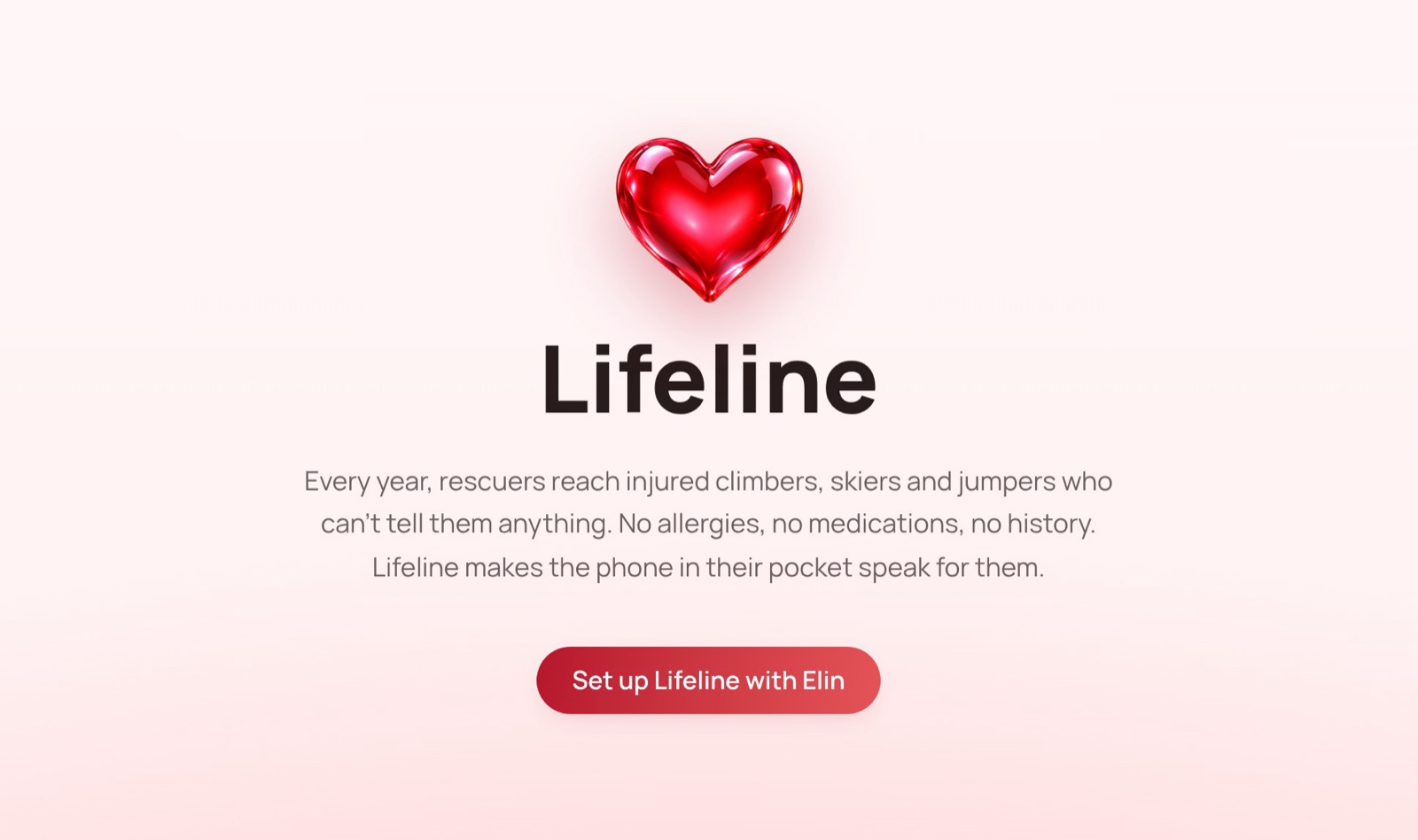
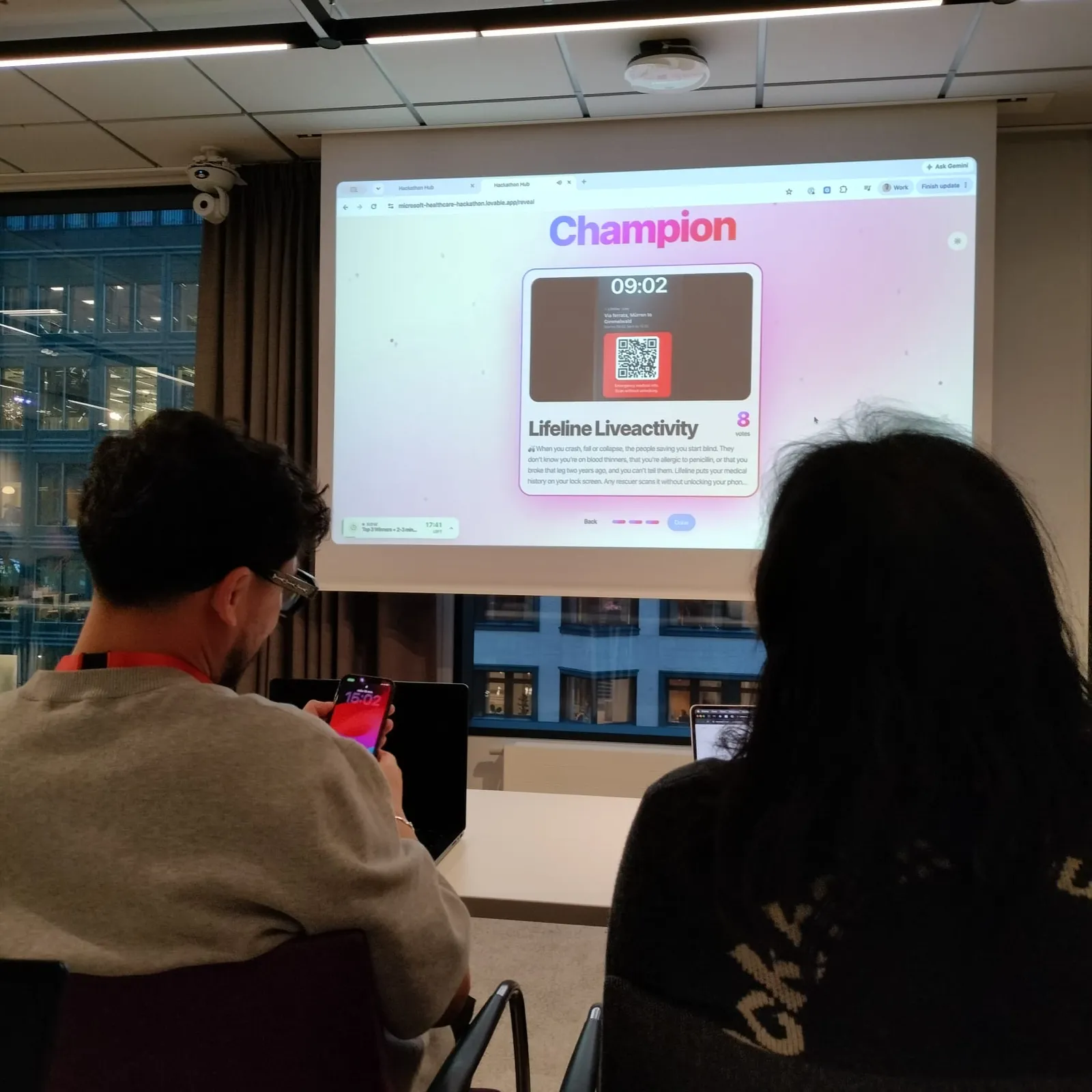
On 16 November 2026, our team won the Microsoft × Lovable healthcare hackathon in Stockholm with Lifeline, a medical ID that helps a stranger help you. We had three and a half hours to build it.
A month earlier, we came second at Stockholm's first Figma Make-a-thon. Read that story →
We think the most interesting part is not that we won. It is how much a small team can now build in an afternoon, and what that means for companies that have ideas waiting in a drawer.
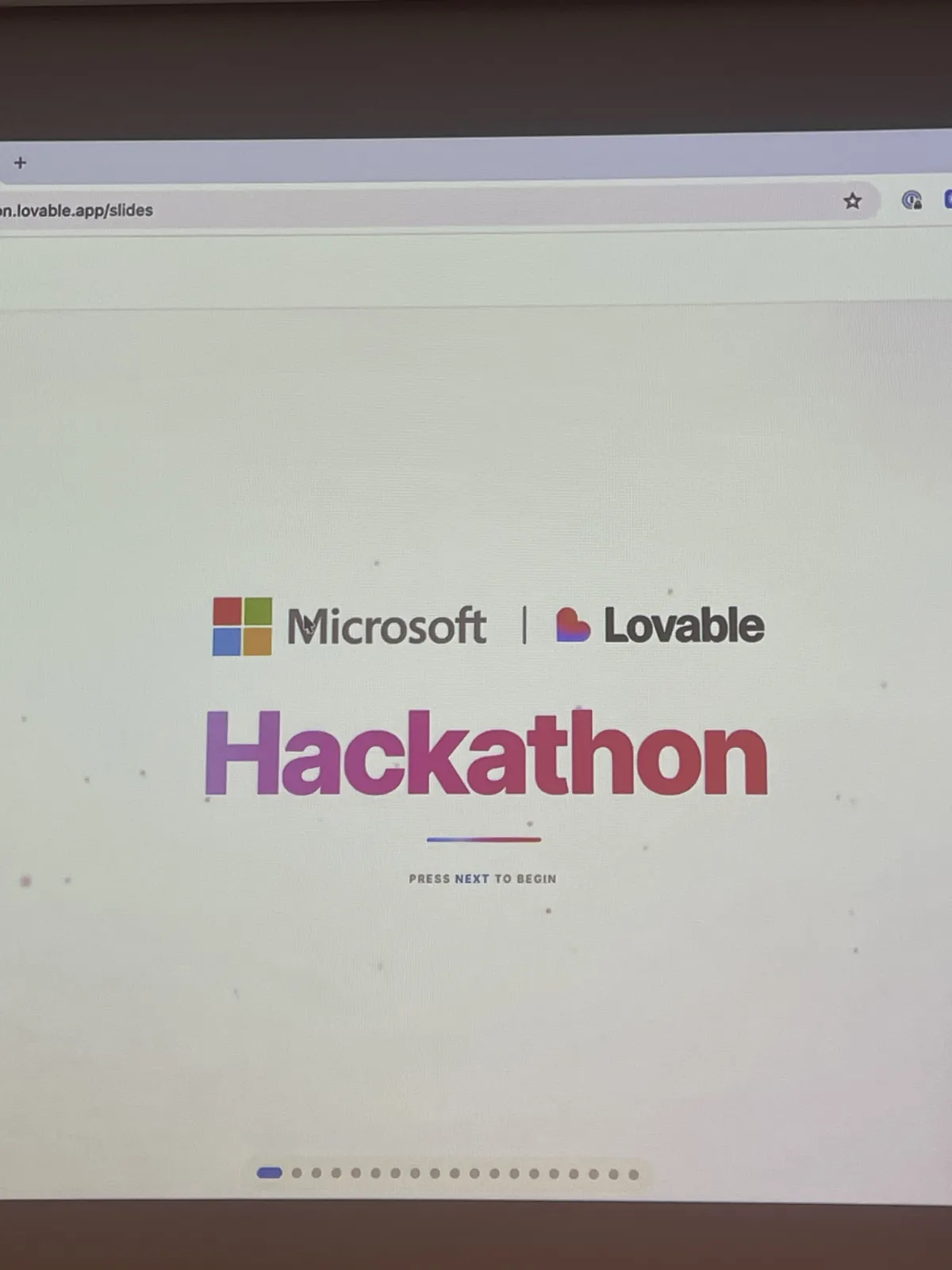
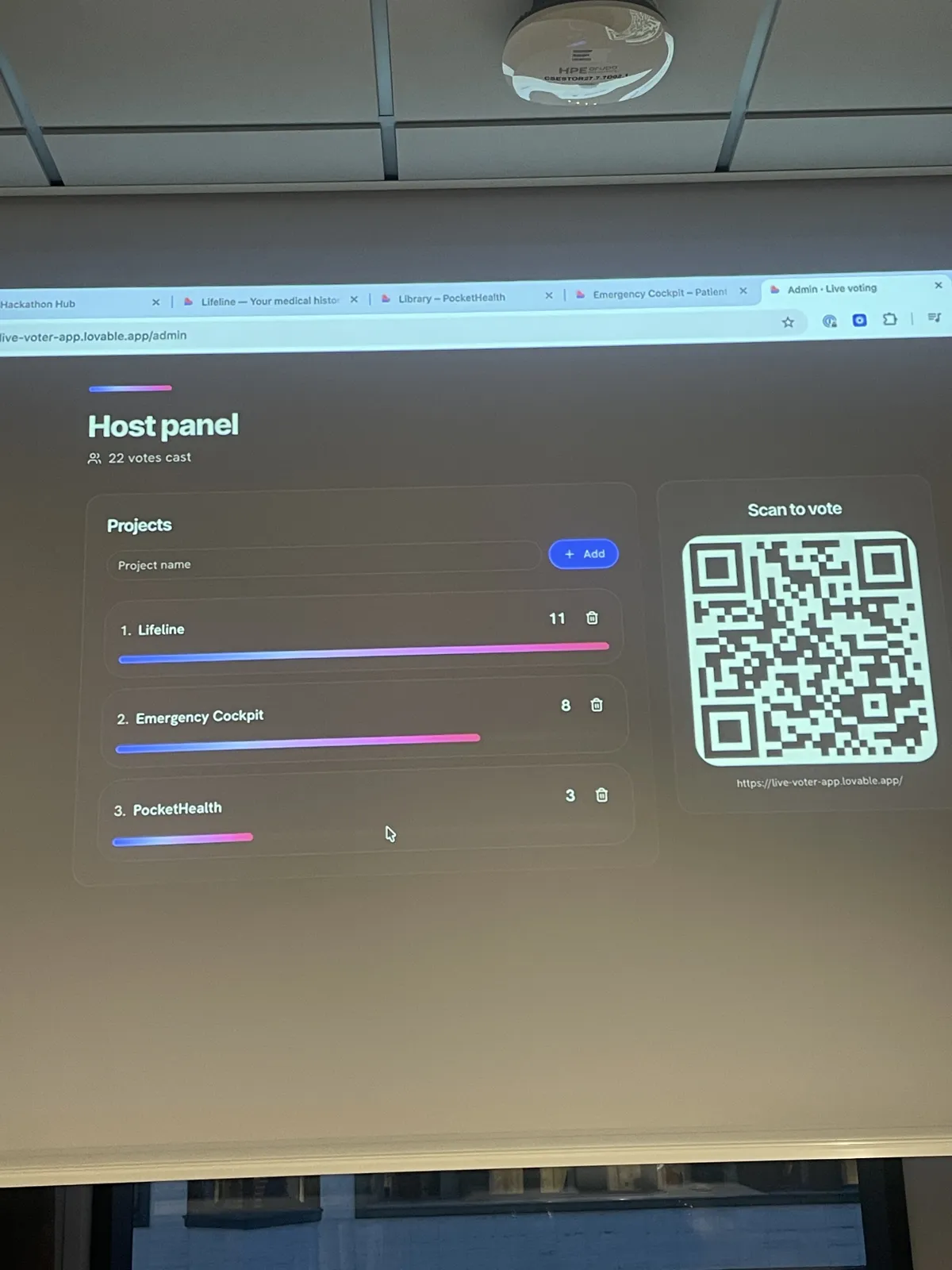
The hackathon was held at Microsoft Innovation Hub on Regeringsgatan in Stockholm: an afternoon where people with different skills team up to build solutions to problems healthcare struggles with every day. It ended with every team showing what they had made, and a live vote in the room. About the hackathon
The problem.
When someone collapses in the street, the people who reach them first rarely know anything about them. They do not know about allergies, medication, conditions or who to call. The person may not be able to speak, and the rescuer may not share their language.
Most of that information already exists. It is just locked inside a phone, a wallet or a medical record that nobody at the scene can open.
What we built.
Lifeline puts a medical ID one scan away. It does three things:
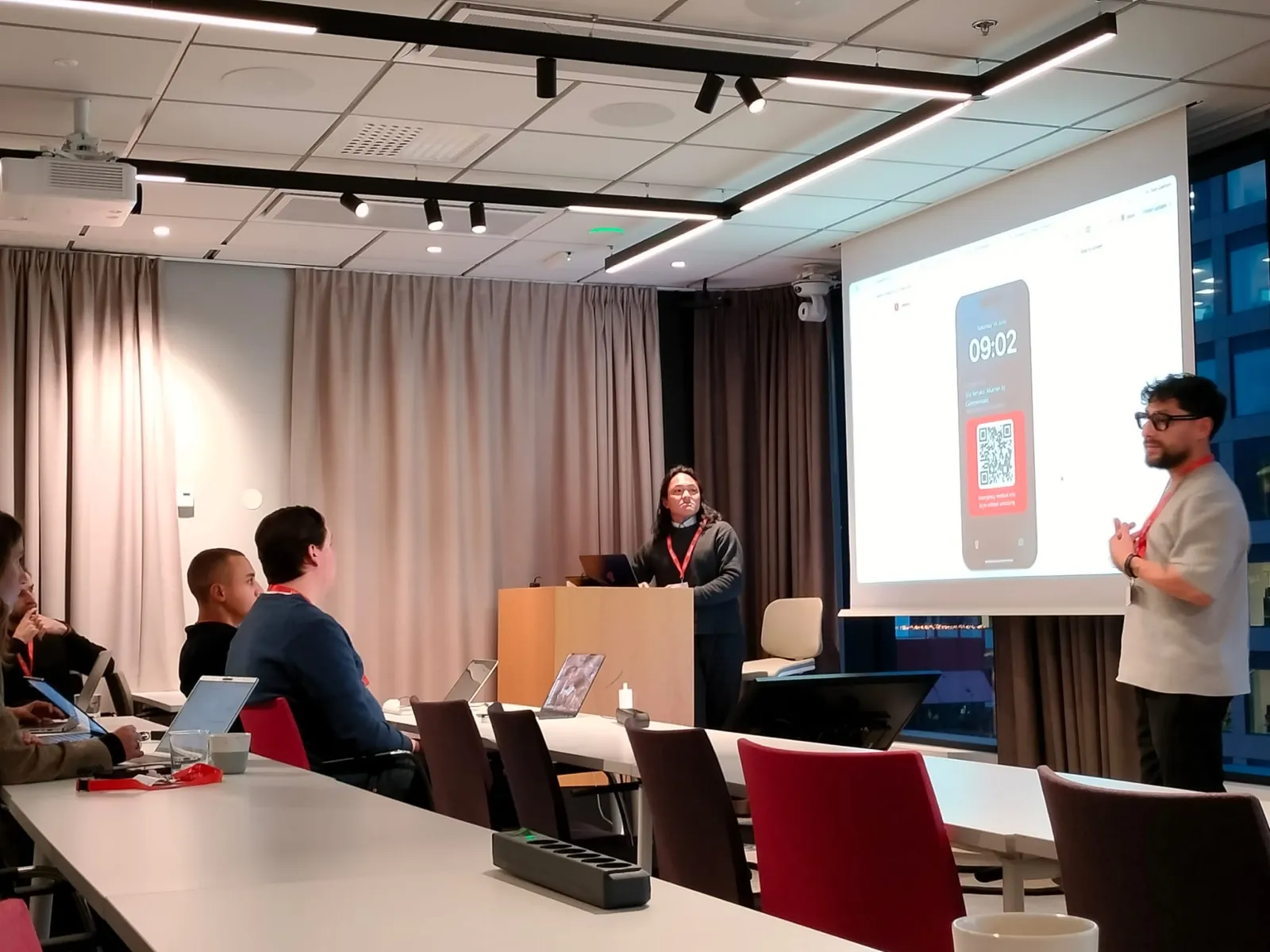
- A QR code on the lock screen. Anyone can scan it without unlocking the phone and see the essentials.
- A rescuer view in their own language. The information is shown in the language of the person helping, not the person who needs help.
- An alert when a check-in is missed. If the user does not check in as planned, their emergency contact is told.
How we built it in 3.5 hours.
The day started with lunch, followed by three and a half hours of building. We used Lovable, an AI tool that turns plain-language descriptions into working software.
What made the difference was not speed of typing. It was how we worked:
- We started with one person and one moment. Someone collapses, someone else arrives. Everything we built had to help in that moment.
- We built one screen at a time. First the rescuer view, then the QR code, then the alert.
- Design mattered as much as function. A stressed stranger has seconds. The rescuer view had to be readable at a glance.
- We knew when to stop. Features that did not help the core moment waited for later.
What's next for Lifeline.
We are adding two levels of access. Anyone at the scene sees what they need to help right away. Verified healthcare staff see more detailed information. The goal is to give strangers enough to act, without exposing more than needed.
Lifeline is a prototype, not a finished medical product.
Now it's your turn.
If we can build Lifeline in an afternoon, your company can build the tool it has been waiting for. That is why we are starting CC Lab, a series of build days where we work side by side with you.
You bring a real problem from your business. It can be an internal tool, a customer portal, a calculator or something else entirely. Our designers and developers help you shape it and build it. At 16:00 you show what you made.